Loan Approval Engine
Projected to restore a severely delayed approval process — 5 days vs. a 2-day target for current customers — through modular architecture, legacy system integration, and ruthless scope rationalization under an 8-month deadline.
Challenge
18 months of stakeholder debt, 30+ fragmented legacy workflow paths, no fixed deadline, and a severely delayed approval process putting SLA compliance at risk.
Solution
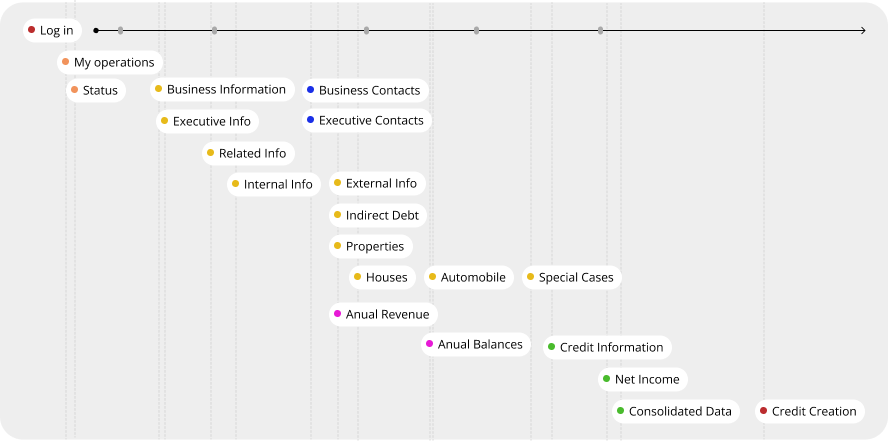
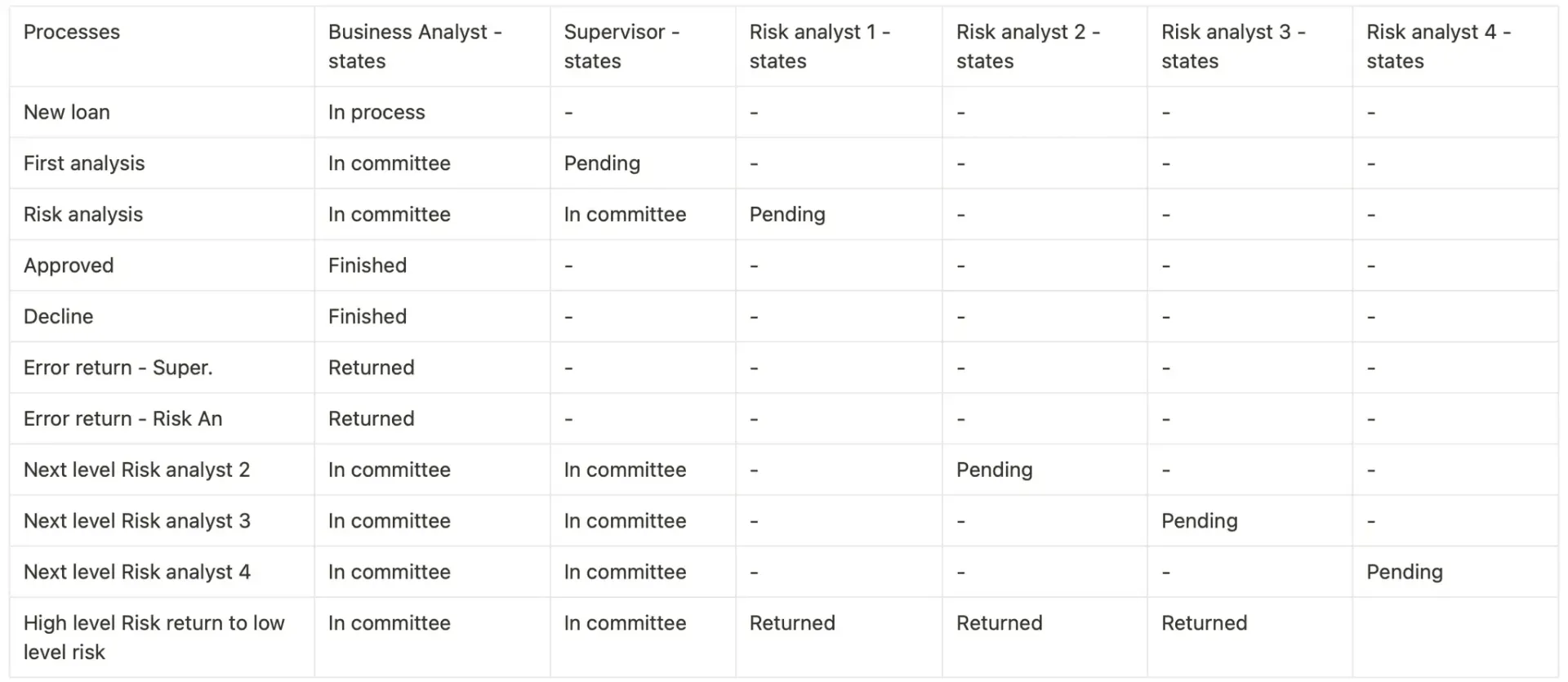
Consolidated 30 legacy workflow paths into a 5-stage macro architecture. Led scope rationalization, automated data ingestion, and designed a 6-role state matrix.
Impact
Workflow projected to restore SLA to target. Each advisor projected to handle their full 40-application monthly capacity, up from 24 actually processed pre-redesign.
The Strategic Architecture
Systems Thinking · Stakeholder Management · Scope NegotiationI joined 18 months into the project to find stakeholder debt and no fixed deadline. When an 8-month window was imposed, I led a Scope Rationalization exercise — facilitating a Priority Matrix workshop to consolidate the workflow down to its essential paths.
Design Decision
I consolidated 30 disparate legacy paths into a single 5-Stage Macro Architecture. This modular approach let the dev team build reusable components and hit the deadline without compromising end-to-end experience.
// Key Feature — State Matrix
I architected a State Matrix defining exactly what 6 roles (Business Analyst to Level 4 Risk) see at every stage — ensuring a fail-safe handoff process.

Information Design & Data Logic
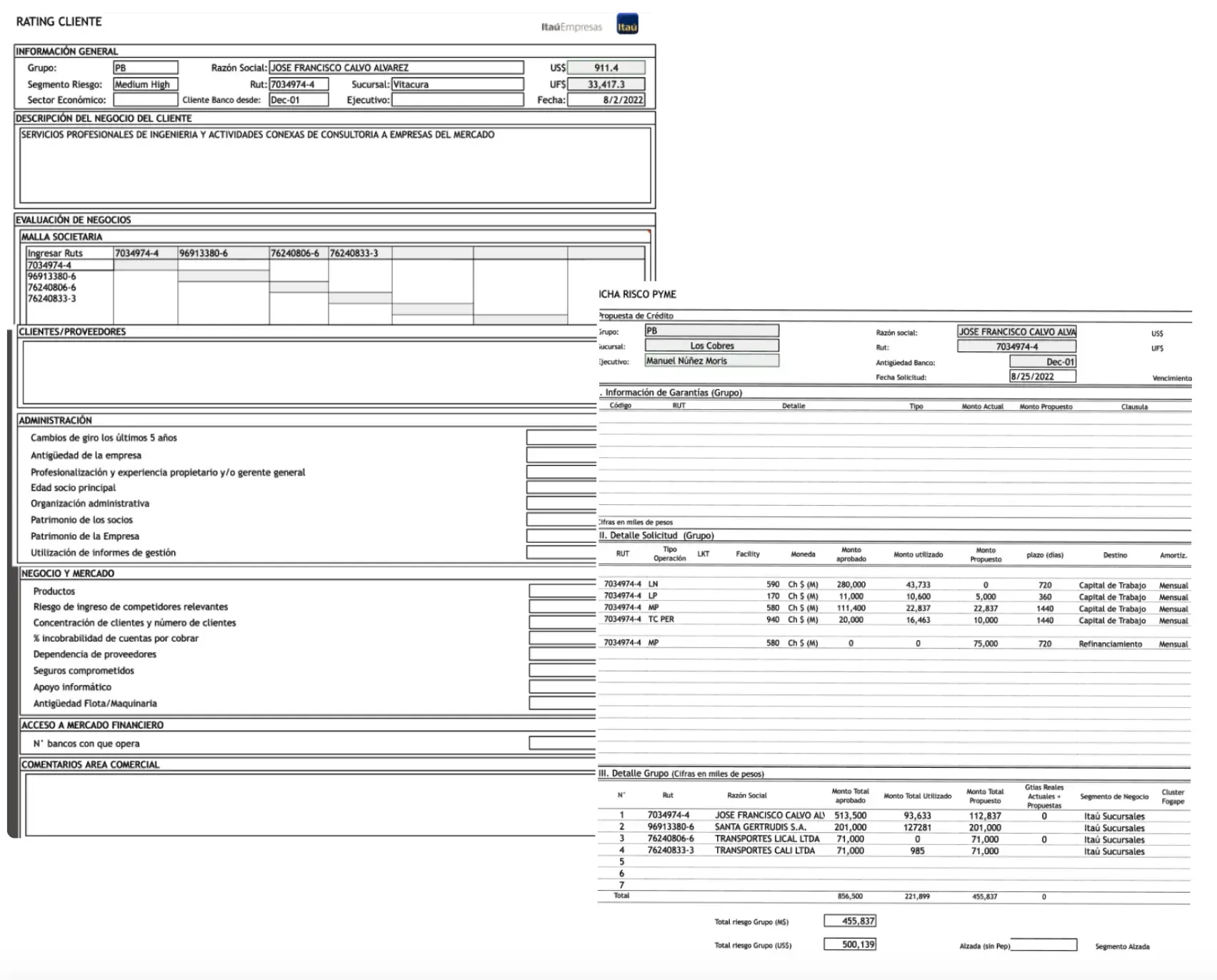
Legacy Tech · Cognitive Load · Human Error ReductionThe primary cause of the delay was manual data entry. A Data Audit identified automatable fields. I architected a solution fetching data from legacy databases directly — transforming analysts from Data Entry to Data Validation.
SLA Restoration
Bank-established target vs. actual current-state processing time:
Before (Actual)
5 days for current customers · 7 days for new customers
After (Target)
2 days for current customers · 3 days for new customers
Product Rationalization
26 legacy products → 7 core offerings (highest revenue generators only).
Before (26)
Foreign Exchange, Letter of Credit, Traditional Factoring, Confirming, Peso Loan Equal Installments… + 21 more
After (7)
Unrestricted Loan, Peso Loan Equal Installments, Foreign Currency Loan, Corporate Credit Card, Personal Credit Card, Checking Account, Line of Credit
Design Decision
A Universal Form with conditional logic dynamically reshapes fields based on loan type — New, Refinanced, Renovation, or Renegotiation. Analysts only interact with information critical to their selection.
Validation, Hand-off & Impact
Usability Testing · Developer Collaboration · ResultsUsability testing followed the real analyst journey: intake, assessment, application.
Intake:analysts previously spent a minimum of a full work day manually gathering and entering a client's personal information and credit history. With auto-fill in place, entering a single User ID populates both the credit assessment screen and the application form directly from the bank's database — bringing the task under an hour.
Assessment:on the Credit Products screen, analysts review a client's current and paid credit history to determine capacity and fit. Testing audited every field for actual relevance, surfacing real cuts — an unclear screen title, unnecessary filters, ambiguous term and guarantee-amount columns, an unused checking-account field, and a hard-to-find scroll affordance — categorized and resolved as Cosmetic, Minor, or Major.
Application: once a credit type is selected, analysts complete the dynamic 4-step form — core fields, transversal fields, review, confirm. Testing confirmed the structure worked end-to-end; feedback surfaced credit-type-specific fields that were missing and have since been added.
// Key Feature — Exit Paths
Engineering partnership mapped Internal System Errors, designing “Exit Paths” and custom error states for legacy database timeouts — analysts never lose their work.
// Results
< 1hr
Task Completion Time
Previously a minimum of a full work day to manually gather and enter a client's profile. Auto-fill from the bank's database brought this under an hour in testing.
— Chapter 02 / Chapter 03
90%
Manual Input Automated
Automated ingestion eliminated 90% of manual fields.
— Chapter 02
30 → 5
Workflow Consolidated
30 disparate legacy paths unified into a single 5-stage macro architecture, hitting an 8-month deadline.
— Chapter 01
“In Fintech, UX is a balance between User Empathy — reducing analyst stress — and System Logic — managing legacy constraints. I turned a failing 18-month project into a successful 8-month delivery.”
Solving something like this for your team?
Book an intro call →